I have nothing interesting to say about Goths. I have not been a goth and never will be. Should they be capitalised? Laziness dictates that they should not.
My 14 year old sister is a goth. This weekend, we went to a goth event.
I have recently returned to church for the first time since I was a child. It is the season of Lent; I feel it is important to go.
My sister said she would be uncomfortable coming with me because people might take offence at her jewerly (a skeleton on a crucifix, for example). This surprised me, and begs a larger question – what is goth?
As an outsider with no expertise, I can see three layers. Firstly, the aesthetic – you like black, skulls are cool, corsets and waistcoats are sexy. Unsatisfying.
Second, one that I am always struck by, the community’s acceptance of otherness – or perhaps more accurately, an acceptance of who you are which is achieved by extenuating otherness.
We all have parts of us we feel are monstrous. To my shame I have often repressed them: my aspiration to normiedom is problematic. A part of me wishes I had, as a teenager, taken my sister’s path, and embraced the strange and uncomforming.
But this second aspect is strongly correlated with what has drawn me, exhausted, to God – that, all the moral authority stuff aside, you are accepted. Should my sister go to church with her skeleton cross, I would be horrified if anyone should take offence – for this would put form over substance.
But this is not quite satisfying, either. I wonder if there is a deeper – and more troubling (for me, as a Christian) division.
Christianity has a complicated structure of feeling. On the one hand, you have God, who loves you and accepts you for who you are. All is redeemable, and in the final throw of the dice all is redeemed (unless you don’t believe that, but more fool you). On the other, you have a strict moral order. Many Christians feel fear, guilt and shame where they should feel joy, joy, joy – it takes effort to escape it (see Tillich again, for example). So there is love, but for most people a lot of bad affects too.
Is there something in the embrace of darkness? The darkness is within us.
Do we, to follow Nietzche, behave dishonestly in flying Love from the flagpole of our highest tower, because we have no power to do otherwise? Is there a power in embracing that inner diabolic (Diabolical Materialism alternative title, but I’m sure someone else has already come up with it)?
But do goths take it so seriously? For all the devils, would anyone say we live without morals, that they have no sense of justice, and that they would not be kind to another person at first instinct? From my experience, goths are neither nihilists nor Nieztchien aristocrats but people who want to be good, kind and genuine.
I am not a goth. I suspect there is no great philosphy. Nevertheless. Nevertheless.
Christianity was the religion of the white coloniser. Around the 17th Century, one begins to see those easy metaphors of whiteness being good, darkness being bad (to illustrate the use of this metaphor, see Shakespeare). It is in the text: in Genesis, let there be light!
We must reclaim the darkness. The darkness is kind to those of us who are ugly. In the darkness, our thoughts stretch out to infinity; they are not limited by the world of light.
We must end the sad marriage of acceptance and purity. You diabolists, come into the mud and rejoice!
I am back on the dating apps and I am 30 years old.
They are, as far as I can tell, set up like this: when you first sign up, you appear on people’s feeds. You get some likes coming your way, you get some hits. It’s heady. If you are on any level self-conscious, forget it: you feel like a king.
As time goes on, you fall down the queue. You put effort into your matches and get nothing in return. An air of desperation grows inside you. You are incentivised to spend: these dating apps are not charities, after all.
I have re-downloaded Hinge and am at the start of the heady period again. I am regularly talking to three people, all of whom seem nice. How strange to be talking to so many.
Imagine you are the generation before. You meet in a bar; perhaps you meet a different person in a bar on a different night. But: one person at a time.
Perhaps you met someone online. Again, I get the sense that it was all slower. Nowadays, the setup is you message a lot of people at a time (you can have up to 8 unresponded to messages on Hinge, for example).
All of this is geared towards high rates of attrition: fine, in principle, but people quickly become disposable. The easy choice is to drop them if your conversation hits a bump in the road.
You, too, are easily disposed of. You have a nice chat with somebody, and then they stop replying. You are left disappointed. Tendrils of feeling go out and are left grasping empty space. There is a lingering question, whispered into the gaps between the code, why?
All of this, and more. You are asked to brand yourself – to take the raw material of your life and package it. You are the product which other people pay for, and the consumer of other people. You engage in a game, but the house deals the cards, and you are always losing, losing.
But the quality I want to focus on is overwhelm: the too-much-ness. When you are in it, the high, there are always too many people to answer to; you want to check your phone too frequently.
And when things progress, there are desires to balance. You have too many dates in a week. You feel obliged to make them, because otherwise it will appear rude. Your life revolves around it.
So many things related to these devices are designed to overwhelm us. The social industry wants our attention all the time. More recently, my screen time is taken up with Whatsapp. I am in constant communication with my friends and family: it is exhausting.
We are meant to be alone. For vast stretches of our lives – when we travel, when we read, we should be alone. But no longer – now our connection is constant. This will of course be familiar. To not be connected to the matrix enculcates anxiety. I itch, at all times, to check it. To check it. To see for myself.
I suggest this itch arises from a desire to feel overwhelmed, rather than feeling our more prosaic and uncomfortable emotions. The experience of the screen has been described as a feeling of coming home. In reality, it is to hold ourselves in stasis, and become the target of new stimuli, felt through a kind of haze.
Recently, I fell out with my flatmate. I was very distressed, because the fallout affected where I lived, and also chimed with some deeper worries I have about myself. I found myself checking my phone much more frequently. I found myself re-downloading the dating apps.
The desire is noise. I would go further, and suggest that what we describe as poor attention spans are in fact a lowered ability to tolerate discomfort, when there is a cureall panacea with us at all times.
To be emmeshed in the matrix is to enter what psychologists call a flow state – to be lifted from your circumstances to a nonplace. And within that, desire races to meet us.
If there is a way to have a foot in the matrix and one without I have not found it. I am only at peace when I delete these godforsaken apps. I am only at peace when I delete twitter and instagram. I will only be at peace when, finally, I take my phone and throw it in the sea, along with armies of holidaying businessmen before me.
Fuck this insidious little horror. It has taken all my secrets and it has sold them. It does not want to make me happy, it wants only my time.
Life is about compromise. It is too difficult to break cleanly from the device. The desire for it is too strong to be controlled. I can only ride the wave a little time. But I ask for peace – as, indeed, should we all.
“Since 2008, neoliberalism might have been deprived of the feverish forward momentum it once possessed, but it is nowhere near collapsing. Neoliberalism now shambles on as zombie – but as the afficionados of zombie films are well aware, it is sometimes harder to kill a zombie than a living person” – Mark Fisher, 2013
Just got back from the centrist rally. Amazing turnout. Thousands of people holding hands and chanting “Better things aren’t possible”
So. The Democratic Establishment have thrown their weight behind Joe Biden. At the last minute before Super Tuesday, two of his most significant ‘moderate’ opponents dropped out and endorsed him. With a clear frontrunner, the Party’s big funders are opening their pockets. The result was a disappointing Super Tuesday for the left, and the death of the Democratic Presidential run.
In hindsight the Democrat Centre’s strategy seems obvious – field a handful of candidates with very-slightly-different USPs, and see which one sticks best. Once that’s determined, close ranks and keep out the Left. Pete Buttigeig struggled hard for the illustrious title as Centre Favourite in Iowa and New Hampshire; but it was Biden’s confident South Carolina win that pushed him over the line.
The graphics showing Bernie fighting a many-faced Moderate Kronenburg were hilarious, but this was always the plan. And in the highly individualised Presidential Race, the left was forced to fight political whack-a-mole, never sure which of the heads of the hydra would be the strongest. So, the enemy of the week went from Robot Pete to Snakey Warren to Bully Klobuchar – and the genial old Biden, whose campaign appeared to be going farcially poorly, was largely ignored by the Left’s attack dogs.
Biden is not genial. He has been behind some of the worst Democratic legislation of the past 30 years. He has an incredibly poor record on Race, Social Security, Foreign Policy, Immigration and the Environment. He is essentially corrupt. He is also, in no uncertain terms, in the middling stages of mental decline.
Recent videos have shown Joe Biden forgetting Obama’s name, confusing his wife for his sister, calling Super Tuesday “Super Thursday”, failing to finish the sentence “we hold these truths to be self evident” and beginning a speech by saying he was running for the Senate. Jesus, let me man retire!
Regardless of all this, Joe Biden is not standing for anything. Can you name a Joe Biden policy? Ask your friends, check his website – the best you will get will be means-tested word salad and reheated Obamaism.
Aside a few sad wonks, nobody is excited about Joe Biden’s policies . Nobody is excited about Joe Biden’s performances. Nobody is excited about Joe Biden’s record. He is an exceptionally weak candidate, a man who is barely there, a walking target for the Trump campaign. He has got as many votes as he has because of name recognition, a friendly media, and the myth of electability.
Joe Biden is the zombie of neoliberalism. His campaign is powered by the logic of the Third Way, the pessimism that nothing can ever change, that idea that elections are won from the centre. It is not that people are enthusiastically for Biden; it is that they do not believe anyone else will beat Trump. He is winning because the electorate have had their expectations floored, that they really can imagine no alternative – that things cannot get better, that the best we can hope for is a return to past ways. So effective has Capitalist Realism been that Biden can succeed without policies, without a campaign, and without a functioning brain.
Biden will lose against Donald Trump. If the seven years since Mark Fisher’s article have shown anything, it is that the Right have made an alternative to Capitalist Realism. It is fantasy – Border Walls that will never be built, British Hegemony that will never return – but it seems to work.
We should not forget, as the Centre likes to remind us, that Hillary Clinton won the popular vote, that had her email case not been reopened by the FBI she may have won. But 2016 was a different time. Although she is uniquely unpopular, Clinton had a base who really believed in her, and a coherent and well-managed campaign. Though her policy would have been continuity Obama, it would have been fantastic had a female President.
Finally, and most crucially, Trump was not the sitting President in 2016. Through impeachment, tax cuts and general incompetence, there has been little evidence that Trump’s base has abandoned him – indeed, the only rumblings of discontent from his supporters was over foreign policy. Indeed, having avoided a major career-ending catastrophe in four years (this may be because everything is so crazy now that nothing shocks us), the scare factor that may have kept some voters away from Trump may have diminished.
Biden is neoliberalism’s candidate, but a Biden win at the primary is a win for no-one. Across the pond I am astounded by the short-termism of the Democratic elite. Surely they must know he will lose. There is no movement strong enough to carry such a weak candidate. They have fallen in behind him as a knee-jerk reaction, a pyrrhic and spiteful victory to stop a genuinely popular campaign.
The past thirty years have seen the neoliberals take positions of power of a lot of nominally progressive institutions. They are in the Democratic Party, as they are in Labour. Now that the tide has turned against them, we have seen they will exercise a scorched earth policy to retain their control, kneecap the Left and dampen radical enthusiasm. They will wait, wait for this wave of raised expectation to end, wait for us to give up our vision for a better world, then emerge as leaders of a crushing and dull polity.
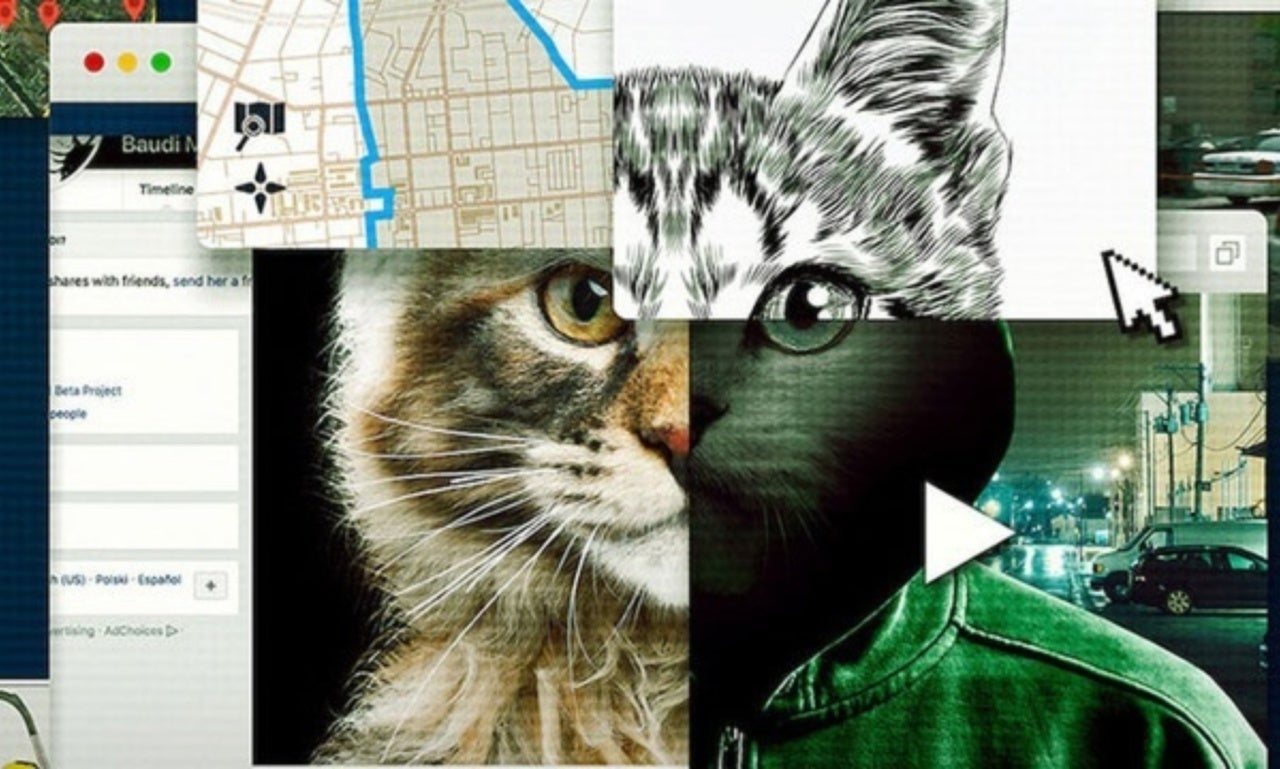
Don’t F*ck With Cats is a flash in the pan piece of algorithmically precise entertainment from the Netflix Content Factory.
It is a documentary of escalating tension about a group of people hunting down a man who kills cats in internet videos. The primary focus is a self-selected team of Facebook sleuths, their motivations and their tribulations.
Our amateur detectives fixate frequently on the fact their prime suspect seems to be obsessed with movies. His activity is filled with references to Hollywood Classics, particularly those about serial killers. The sleuths think they can piece together the man from the homage, putting together the clues he’s left in Facebook Likes, posters and posts to work out his next move.
The structure of the documentary rewards their reasoning – footage of our detectives recounting their theories is interspersed with correlating police reports of what the suspect actually did. The documentary includes some criticism of internet vigilantism – a man is driven to suicide, partially (so the documentary makes out) because the group mistook him for the cat killer – but their methodology is praised. Our takeaway is that this group were overzealous and obsessive, prone to aggression, but largely effective and systematic.
It is easy to forget the internet randos had absolutely no bearing on the police investigation. Nowhere in the police testimony are “Find the Kitten Vaccuumer… For Great Justice” (freaky name) mentioned at length. We can infer the cops saw the cat killer catchers for what they were: overenthusiastic loners with no discipline and cavernous holes in their method.
In reality, it was not just the kitten killer, but they, us, who understand the world through movies.
The group’s initial suspicions came from pop psychology – serial killers always start with animals. After the second cat video emerged, the group treated every detail as a cryptic clue; while praising the suspects’ intelligence and planning at every opportunity.
What informs their image of a psychopath? Movies! In their imagination, the suspect could be nothing less than cunning, devious, intimidatingly prepared, twisted and evil – John Doe, Hannibal Lecter and Patrick Bateman, rolled into one.
In the end, it appears their hypotheses were vindicated – Luka Magnotta was tried as a murderer, and the group’s mad dog vision of him was simply a chaser for the press to pick up. But we must remember the group self-motivated for months with no validation, no certainty they were on the right path. They were sustained by an imagined psychopath: they were fantasists. They were living a movie in which they were great detectives bringing greater justice to the greatest evil.
Netflix has ushered in a True Crime Boom. DFWC’s protagonists, active in the mid 2010s, hyper-online, attracted to detective-work – must be influenced by the zeitgeist: fascinated by true crime, living true crime. No wonder it was so easy to turn the story into a documentary – the people involved were already actors. Art imitates life, imitates art.
This reminds me of the reaction to the Coronovirus. Regardless of the actual threat to life, the story of the epidemic that will destroy humanity already exists in our collective imagination. It generates so much hysteria because this is a story we have always expected to happen. Reality is slotted into the beats of a narrative laid out in Contagion, Zombie movies, Pandemic II. The panic is totally disproportionate; and the main result has been a huge increase in racism.
Episode 9s flaws show it for what it is – the end of a period of cinemawith capital at its heart
*Spoilers ahead*
As the credits rolled on the Rise of Skywalker, I felt something unexpected: hope. Not because I was moved by the narrative or excited about the future of the franchise. I was hopeful because I was dissatisfied.
Star Wars Episode 9 is fine – quite fun, even. But it wasn’t good. It wasn’t fulfilling and it didn’t satisfy me. Judging by the disappointing (though still gratuitous) box office haul and lukewarm reception, I am not the only one. For Star Wars, the biggest franchise of them all, lose its shine is a sign the ecosystem of Late Capitalist Cultural Production is changing.
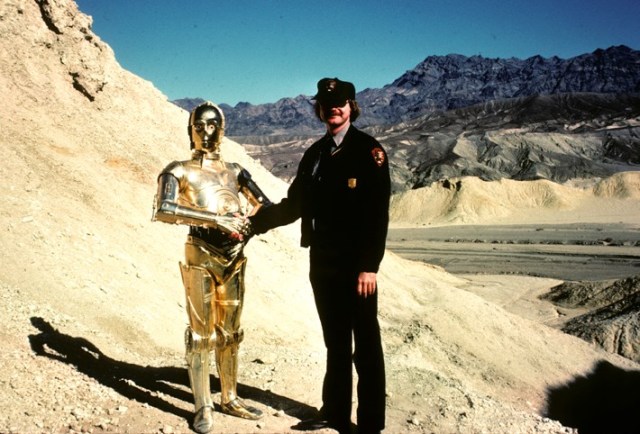
Coming out in 1977, Star Wars is heralded as ending an era of dark, complex Hollywood drama, replacing it with light, spectacular entertainment driven by special effects technology. Star Wars was tied up with Postmodernism – a pastiche of Westerns, Space Opera and Mythology, it shares postmoderns’ disregard for seriousness, and adopted it’s fascination with the Image through vivid iconography and visual splendor. As postmodernism dismissed religious or ideological narratives, Star Wars created new mythologies based in The Hero’s Journey that reached out to the heroic potential of the individual. It was not interested in illuminating the social or meditating on the painful: when Uncle Owen dies, our brave hero does not spend weeks organising his funeral and navigating the Tatooine’s inheritance tax laws; he moves on, as we must, to the spectacle. Even before the prequels, Frederic Jameson identified Star Wars as a “nostaliga film”: a chance for parents to satisfy their longing for the lost Western genre. The sequel trilogy kept itself going by cannibalising franchise iconography. Feeling bored? Here’s Han! Need a jolt? Look, it’s Luke’s X wing! Want to go home? Look at the Moisture Farm! LOOK AT IT!!!
So too did the series dovetail with Reaganite hypercapitalism. The euphoria of the cinematic experience was maintained in off-years through one of the most effective marketing vehicles ever seen. Those hooked on the ersatz spirituality of the films could maintain their devotions through the consumption of collectables, or – as Mark Fisher suggests – “what was being sold was not just a particular film, but a whole world, a fictional system which could be added to forever” through spin offs, books, tie-ins and – crucially – toys.
Born in 1996, I was the perfect lab-rat for the second generation of Star Wars marketing. I was a Prequel kid through and through: I had the lego, played Star Wars Battlefront 2, and ran around the local park with bits of dowel painted to look like lightsabers. Star Wars was as large a part of my upbringing as Christmas. Star Wars was culturally massive – everyone liked it. Star Wars was our collective belief, our shared identity, and we were zealots to a franchise that cynically farmed our parents for cash. As an adult, I feel the pull toward the warmth of Star Wars – the Sequel trilogy remain the only films I have seen in the cinema by myself. But the Rise of Skywalker was so dull, so inert, that it may well have cured me of the whole brand.
The tension was weak, the arcs were hammy (bad even for Star Wars), the dialogue was functional, the effects were alright, the stakes were forced and the emotional resonance, for the most part, miles away. But most of all, the whole thing just felt deeply pointless.
J.J Abrams uses a filmmaking technique called the Mystery Box – one intriguing mystery leads to another, to another, on and on. You are captivated until the final box is opened, revealing… nothing. All that build up, all the suspended plot points, all for… The Emperor coming back? More Star Destroyers? A shot of some Ewoks? Viewers of Lost will understand that the “Mystery Box” is the financial capitalism of storytelling – the filmmakers loan you a narrative, creating spectacle and inviting wild speculation with the promise of fulfillment later on. But, when you reach the end, you find there was nothing; the speculation was the drama, the debt cannot be fulfilled, the audience are impoverished. They realise they have wasted emotional labour and time on a project that has no lasting artistic benefit.
For this reason, I really liked the Last Jedi: here was a film that understood its place in the collective unconscious. It knew that, for my generation, nostalgia was the primary source of authority: Star Wars replaced God, Luke Skywalker replaced Jesus (John is probably Han Solo, and Paul/Saul maybe Chewie?). The Last Jedi knew it was working in the realm of Gospel, and invited Talmudic re-interpretations of canonic scripture. Were the Jedi wholly good? Can the heroic individual remain virtuous? The Last Jedi offered narrative surprises and challenged the series’ fundamental assumptions – icons could be broken, adventures could end in failure, recklessness had consequences and the image – the image – was to be used with caution. Is Luke’s terror at taking up the mantle of the hero not Rian Johnson’s terror at directing the hero of a sacred textural canon? Is the lesson not that The Image of The Hero has meaning only when it empowers collective action? Aren’t these quite modernist questions?
Ultimately, the film industry producing Star Wars could not contain this kind of dialectic. The religiosity created to sustain the franchise turned against itself. Legions of people, for whom Late Capitalism replaced meaning with franchise, denounced The Last Jedi as heresy. As in the Prequel Trilogy, Disney learned that revisionism and innovation were bad for business. Petrified of damaging their most valuable property, they relented and produced a predictable, by the numbers sequel that totted out the same characters and arcs that we know and love. Lucky us.
The results of these safe-bets, these committee-designed plots, the now annual milking of the Star Wars cow, is narrative desertification and consumer fatigue. Regardless of neoliberal hopes, man cannot live on Nostalgia alone, and the market is beginning to show this. The Terminator franchise has been in the doldrums for years; Alien, Bladerunner, Predator are all in serious decline. Within Star Wars, Solo received such a poor showing that anthology movies were hastily put on hold. The Skywalker Saga behemoth seemed like a mainstay, but even that has buckled.
The problem is that Neoliberalism pretends to give us what we want – essentially, more of what we already like. I am reminded of Mark Fishers words on paternalism. It has the ‘bad’ aspects of being patronising and controlling, but also the beneficial elements of education, the sharing of knowledge from a privileged group and consciousness raising. For Fisher, Paternalism can be described “in terms of the gift and the surprise. The best gifts are those we wouldn’t have choosen for ourselves – not because we would have overlooked or rejected them, but because we simply wouldn’t have thought of them.”
By contrast, “Neoliberal “choice” traps you in yourself, allowing you to select amongst minimally different versions of what you have already chosen; paternalism wagers on a different “you”, a you that does not yet exist.” With Star Wars Episode 9, we begin to break free, and see that neoliberalism cannot give us what we want.
The glaring exception is the continued success of the Marvel movies. What could epitomise neoliberal spectacle-by-committee more, or be more popular? The answer is not to wait for the Marvel films to be bad – rather, it is to raise our consciousness, to demand more from mass media. It is to locate our pain and wish it to be represented in art, rather than escaped with the spectacle and thrill of the Blockbuster Theme Park Ride. As we descend into Climate Breakdown and Disaster Nationalism, now more than ever we need to be challenged, surprised and threatened by art. Neoliberalism will try to keep us wrapped in a warm blanket of our own nostalgia as the world burns. We must awake.
I have, in brief flashes, immensely enjoyed writing. To quote Richard Seymour loosely, to write is to give yourself a second body – to inhabit another space and leave a part of yourself there.
After writing voraciously before and during University, I completed my History degree in a state of exhaustion, and haven’t written anything I’m proud of since.
A month ago I quit my job. I want to reach for something better; part of that is to try to write again.
The woke stasi have regrettably destroyed comedy, so if you want to know about benches, bums, what type of fruit your college is, whether or not you are the second coming (one for the fans), or whatever horseshit I wasted my degree writing, you will need to go back to a time when I wasn’t scared shitless.
The blog is called Muddy Water. In a sense, it’s about despair. Muddy Water is part of contemporary iconography: as sea levels rise and once-freak weather becomes everyday, the image of muddy water filling streets and fields with dirt and sewage will be a familiar one in the 21st Century. Muddy Water expresses the Lovecraftian despair of Climate Collapse, inescapable as it is incomprehensible. We will know it through pictures of, and eventual submersion in, Muddy Water.
I’ve experienced despair in frequent and various states since the last time I wrote: despair about humanity, myself, the future, my job – real, immediate despair and a long, gripping dread. Muddy Water is all around, and needs clear channels to drain away.
Muddy Water is also about discovery. It hides objects below its surface, only for them to burst suddenly into view. Ruptures in the Expected can be terrifying, but the possibility of random and unexpected grace gives me hope.
Beginning in my final year of University, I experienced an intense anxiety that lasted for almost two years. The focus shifted month by month – I believed I would go insane, I believed I would harm myself, I believed I would harm others. I was desperate to know I would be okay, and to dig through my past to find the cause of my illness. I was struggling with uncertainty – I needed to know what had happened, and would happen.
One of the ideas that helped me recover was the realisation that the unknown is a near constant in human history. The world has never been predictable, and that elements of human nature will always be mysterious. While I was anxious I jumped from problem to problem, but understanding jumped out suddenly, like revelation. We are entering a period of struggle; despair will grind us to nothing; we need to open ourselves to hope and opportunity.
All pretty serious. Will there be gags? The people demand gags!
As the cat can have a little salami, the people can have a few gags. But they will be a thin gruel for the joke-starved masses. Only when people share all jokes in common will we be free. The world is cruel and hilarious, and should be a common treasury for all.
Luke is an incredibly normal young man who likes fishing, rat-baiting and offering people a knuckle sandwich. He is currently between jobs. He dreams to one day own a small dog.
Luke studied History at the University of Cambridge, which allowed him to flourish and be destroyed in equal measure.
~edit year of our Lord 2026~ Luke is 30 and has restarted his blog on a whim. He now wishes to write about God, love, going on dates, movies (probably), Marx, and why he is ill all the time.
Why is he blogging publicly?
He likes writing about his thoughts and feelings almost as much as he likes inflicting them on others.
What will he do if this blog is successful?
Be surprised, amazed, revel in feelings of total contentment.